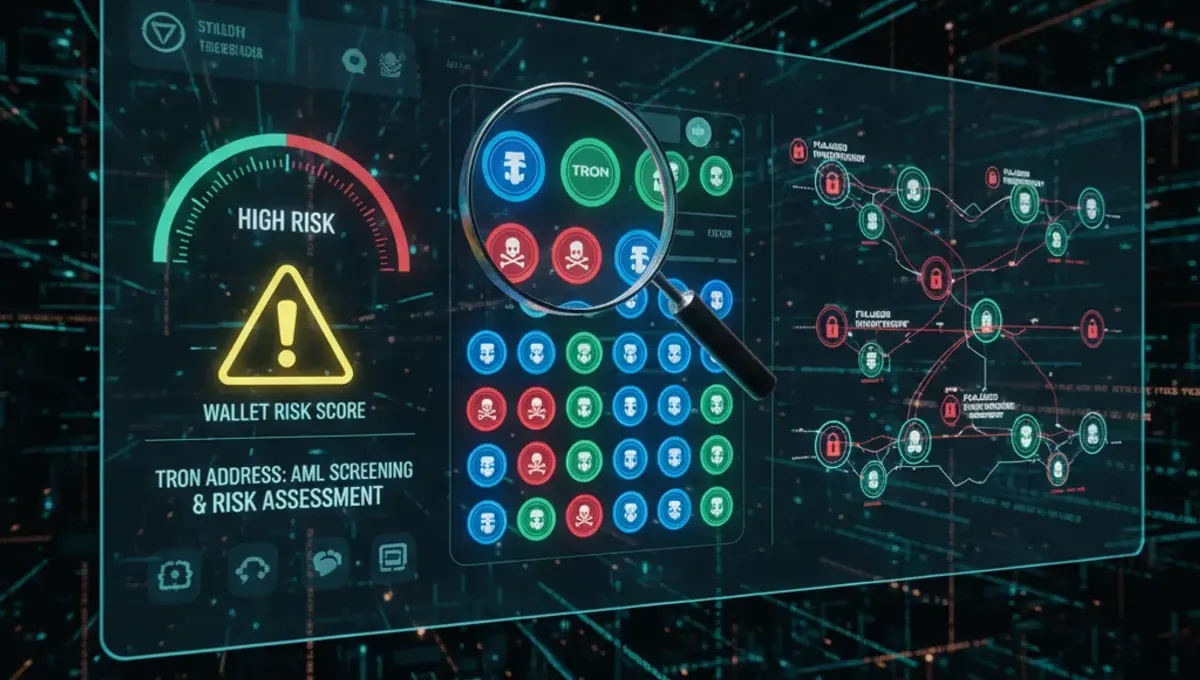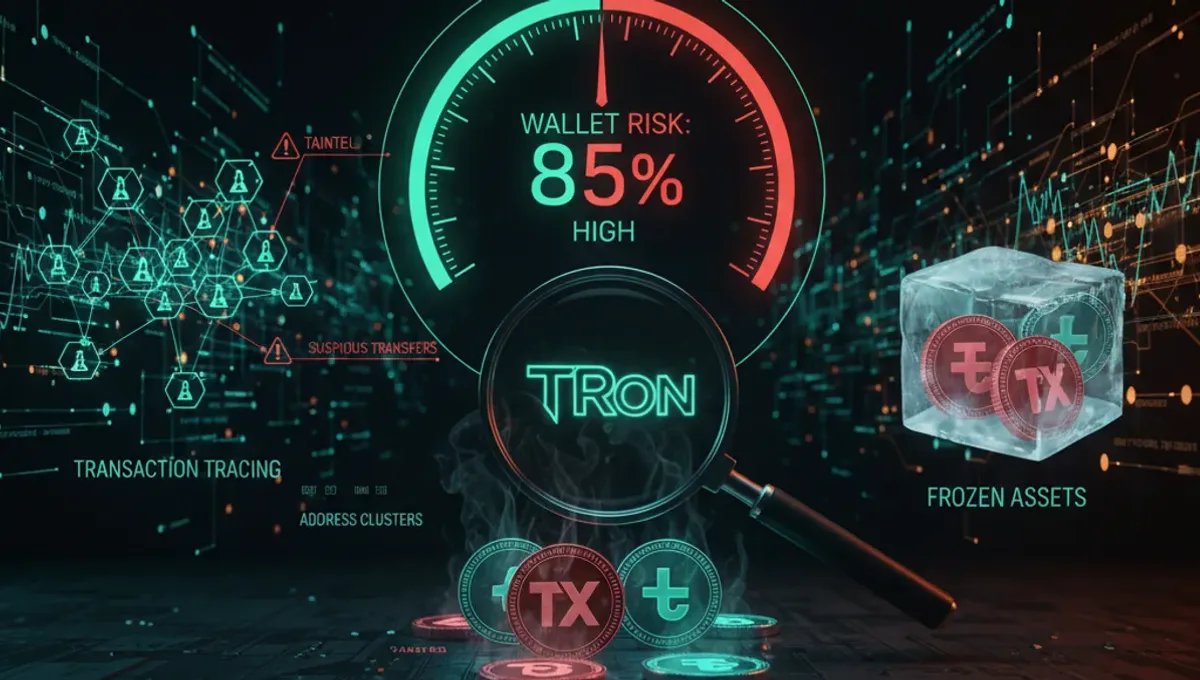
What Is a Tron Address and Why Does It Matter for Compliance
A Tron address is a unique identifier on the Tron blockchain, formatted as a 34-character string starting with 'T' (e.g., TQCz8aSwFHkbNckysj8aJUVWVcnpxcgziY). Each address represents a wallet or smart contract and is permanently recorded on the immutable Tron ledger. For compliance purposes, the address itself is neutral—what matters is its transaction history. A Tron address check reveals whether that wallet has interacted with high-risk sources: stolen funds, mixing services, darknet markets, gambling platforms, or sanctioned entities. Exchanges and payment processors use this data to flag deposits; a single incoming transfer from a flagged address can trigger account freezes or mandatory KYC reviews. Understanding what your Tron address means in a compliance context helps you avoid receiving tainted coins and protects your access to exchanges and custodial services.
How to Check a Tron Address: Step-by-Step Walkthrough
To check a Tron address for compliance risk, follow these steps:
- Obtain the full Tron address (starts with 'T', 34 characters).
- Visit a trusted AML screening service that supports Tron address checker functionality (see the AML Services directory on this site for verified providers).
- Paste the address into the lookup field.
- Review the risk score and transaction history report, which typically shows: - Incoming and outgoing transaction patterns - Exposure to known risk categories (mixers, darknet, scams, sanctions) - First and last transaction dates - Total volume and number of transactions
- Interpret the risk score (low, medium, high) based on the service's methodology.
- If risk is low, the address is generally safe to receive from. If medium or high, investigate further or decline the transfer.
This process takes seconds and is the fastest way to perform a Tron address check before accepting deposits. Many services offer free lookups with limited detail; paid tiers provide full transaction graphs and historical analysis.
Understanding Tron Address Risk Scores and What They Mean
A risk score is a numerical or categorical rating assigned to a Tron address based on its transaction history and behavioral patterns. Most AML services use a scale of 0–100 or categories like low, medium, and high. Here's what each typically indicates:
- Low risk (0–20): Clean transaction history, no known exposure to illicit activity, safe to receive from.
- Medium risk (21–70): Some exposure to higher-risk entities or transaction patterns, but not definitively linked to crime; requires manual review.
- High risk (71–100): Strong indicators of illicit activity, sanctions exposure, or direct links to known bad actors; should be declined or escalated to compliance.
Risk scores are not binary judgments of legality; they reflect statistical likelihood based on blockchain analytics. A medium-risk score might simply mean the address has interacted with a mixer or received funds from an exchange (which is common). Context matters: a business wallet may have higher scores due to volume and diversity of counterparties. Always review the underlying transaction details, not just the number. The best practice is to set internal thresholds—for example, accepting only addresses below 30 risk score for routine deposits, and escalating anything above 50 to your compliance team.
Common Risk Factors Found in Tron Address Checks
When you check a Tron address, the screening report flags exposure to specific risk categories. Understanding these helps you interpret results:
- Mixers: Services that pool and shuffle transactions to obscure origin. Interaction with mixers is a red flag for money laundering intent.
- Darknet markets: Wallets linked to known darknet marketplaces (e.g., those selling illegal goods). Direct darknet exposure is high-risk.
- Scam addresses: Wallets associated with Ponzi schemes, rug pulls, or phishing campaigns. Receiving from these can implicate you in fraud.
- Stolen funds: Wallets containing cryptocurrency traced to theft or hacking. Receiving stolen crypto can result in exchange freezes and legal complications.
- Sanctioned entities: Addresses linked to individuals or organizations on OFAC or other sanctions lists. Transactions with sanctioned addresses violate law in many jurisdictions.
- Gambling platforms: Wallets tied to online casinos or betting services. Some jurisdictions and exchanges restrict gambling-related deposits.
- Ransomware: Wallets known to receive ransom payments. These are typically high-risk and flagged aggressively.
A single exposure does not always mean the address is unusable—context and transaction volume matter. A wallet that received a small amount from a mixer years ago may be lower risk than one actively using mixers. Use the full report to assess intent and recency.
Tron Address Checker Tools: What to Look For
When selecting a Tron address checker or wallet screening service, prioritize these features:
- Tron network support: Ensure the tool explicitly covers TRX and USDT TRC20 tokens, not just Bitcoin or Ethereum.
- Real-time data: Lookups should reflect current blockchain state, not stale databases.
- Detailed reports: Beyond a risk score, you should see transaction history, counterparty analysis, and specific risk flags.
- API access: If you process many addresses, an API allows bulk screening and integration with your systems.
- Compliance documentation: The service should explain its methodology and provide audit trails for regulatory purposes.
- Transparent pricing: Free tiers are useful for occasional checks; paid plans should clearly state limits and features.
Our AML Services directory on this site curates verified providers that meet these standards. Starting there is the safest way to find a reliable Tron address lookup tool without trial-and-error. Many services offer free trial lookups, so you can test before committing.
What to Do If a Tron Address Check Flags Your Wallet
If you check your own Tron address and find a medium or high-risk score, take these steps:
- Review the specific flags: Identify which risk categories triggered the score. A single old transaction with a mixer is different from active darknet exposure.
- Document your intent: If the flagged activity was legitimate (e.g., you used a privacy tool for personal reasons), gather evidence—transaction dates, counterparty names, business justification.
- Contact your exchange or custodian: Inform them proactively before they freeze your account. Transparency helps.
- Request a manual review: Many exchanges will whitelist addresses or adjust risk assessments if you provide context.
- Avoid future risk: Going forward, only receive funds from known, low-risk sources. Use a Tron address checker before accepting large transfers.
- Consider a new address: If the historical risk is severe, starting fresh with a new Tron address may be simpler than disputing old transactions.
Exchanges are more forgiving of flagged addresses when you act first and provide clear explanations. Silence or evasion typically leads to account freezes.
Best Practices for Tron Wallet Screening Before Receiving Deposits
To minimize risk of receiving tainted coins or frozen USDT, adopt these practices:
- Always check the sender's Tron address before accepting large transfers. A 30-second lookup can prevent weeks of account holds.
- Set internal risk thresholds: Define what risk score levels you will accept for routine deposits, and escalate anything above that to compliance review.
- Request sender information: Ask counterparties for their wallet address in advance. Legitimate businesses will provide it; scammers often refuse.
- Use a dedicated receiving address: If possible, keep a separate Tron address for deposits, distinct from your operational or trading wallets. This isolates risk.
- Monitor your own address: Periodically check your Tron address to catch any unexpected inbound transfers from risky sources before they settle.
- Verify exchange compliance: Before depositing USDT or TRX to an exchange, confirm that exchange screens inbound addresses. Most major exchanges do; smaller platforms may not.
- Document all checks: Keep records of Tron address checks you performed, including timestamps and risk scores. This creates an audit trail for compliance audits.
These steps are especially important if you handle USDT on Tron, since frozen USDT deposits can lock up capital and trigger regulatory inquiries.
Frequently asked questions
How do I find a Tron address to check?
A Tron address is provided by your wallet or exchange when you create an account. It's a 34-character string starting with 'T'. You can also find it in your wallet's receive section or by asking the person sending you funds. Never share your private key; only the public address is safe to distribute.
What does a high-risk Tron address mean?
A high-risk Tron address has strong indicators of illicit activity, such as direct links to mixers, darknet markets, scams, or sanctioned entities. Receiving funds from a high-risk address can trigger exchange freezes or compliance holds. You should decline transfers from high-risk addresses or escalate to your compliance team.
Can I check a Tron address for free?
Yes, many AML screening services offer free Tron address checks with basic risk scoring. Free tiers typically show a risk score and general flags but limited transaction history. Paid plans provide detailed reports, historical analysis, and API access. Check the AML Services directory on this site for verified free and paid options.
Why do exchanges freeze USDT from certain Tron addresses?
Exchanges freeze deposits from high-risk Tron addresses to comply with AML and sanctions regulations. If an address is linked to stolen funds, darknet activity, or sanctioned entities, accepting the deposit could expose the exchange to legal liability. Freezes are typically temporary pending manual review or compliance clearance.
How often should I check my Tron address for compliance?
Check your Tron address periodically—at least quarterly if you receive frequent transfers, or before major deposits. Regular checks help you catch unexpected inbound transfers from risky sources early. If you receive a large transfer, check the sender's address immediately before the funds settle.