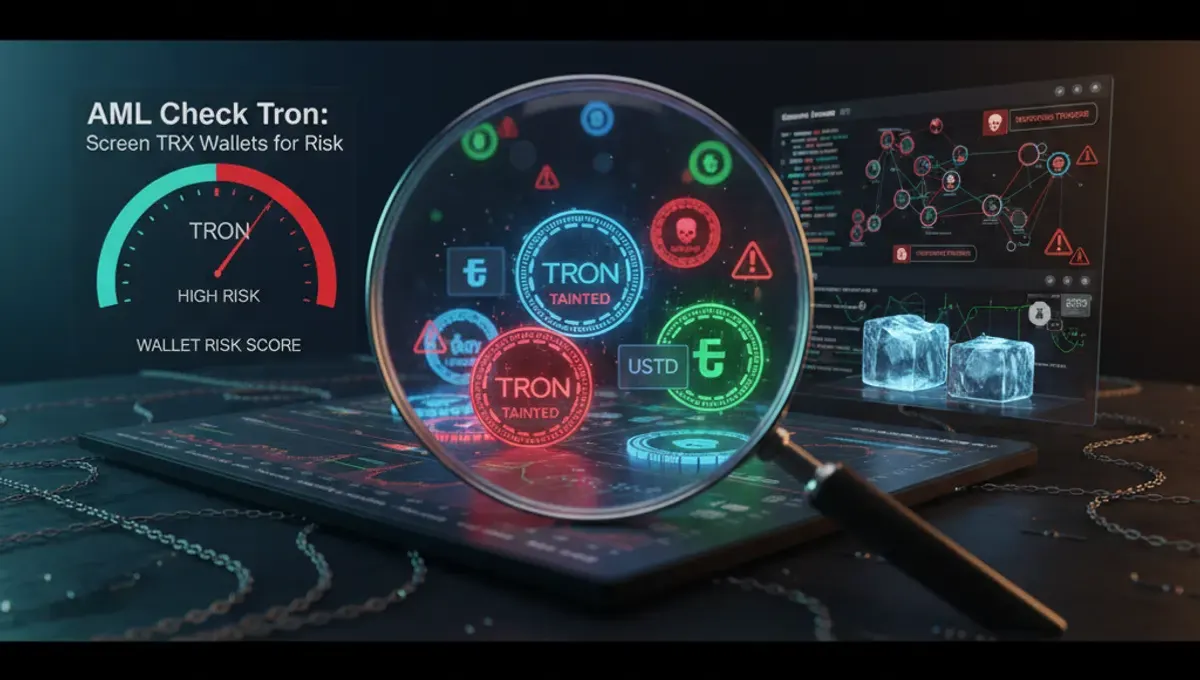
What Is an AML Check on Tron?
An AML check on Tron is a compliance scan that examines a TRX or USDT TRC20 wallet address for connections to illicit activity. The check traces the wallet's transaction history on the Tron blockchain and flags exposure to known risk categories: darknet markets, theft, sanctions lists, mixing services, and fraud.
When you perform an AML check on a Tron address, the screening tool compares the wallet against blacklists, analyzes transaction patterns, and generates a risk score. This score indicates the likelihood that coins received from that address could be considered tainted or dirty crypto. A low risk score means the wallet has clean transaction history; a high score signals potential compliance problems.
Tron's public ledger makes this process efficient. Every USDT TRC20 transfer and TRX transaction is visible on-chain, so compliance platforms can track coin provenance without relying on third-party data.
How Does AML Scoring Work for Tron Wallets?
AML risk scoring for Tron wallets uses blockchain analytics to assign a numerical or categorical rating based on transaction history and counterparty risk. Most platforms use a scale from 0 (clean) to 100 (high risk), though some use color codes or simple categories.
The scoring process examines:
- Direct transaction history: Does the wallet send to or receive from known darknet addresses, scams, or sanctioned entities?
- Indirect exposure: Has the wallet interacted with addresses that have high-risk connections, even indirectly?
- Behavioral patterns: Does the wallet show signs of mixing, rapid transfers, or other obfuscation tactics?
- Blacklist matches: Is the address flagged on sanctions lists, law enforcement databases, or exchange blocklists?
Acceptable risk thresholds vary by use case. Exchanges typically accept wallets with risk scores below 20–30; institutional transfers may require scores below 10. If your Tron wallet receives coins from a high-risk source, the risk score reflects that exposure, and downstream recipients may reject the transaction or freeze your account.
Step-by-Step: How to Check a Tron Address for AML Risk
Follow these steps to perform an AML check on a Tron wallet:
- Obtain the wallet address: Copy the full TRX or USDT TRC20 address you want to screen. Ensure it starts with 'T' (standard Tron format).
- Choose a screening tool: Visit the AML Services page on this site to find verified, trusted AML check platforms that support Tron.
- Enter the address: Paste the Tron address into the tool's search field.
- Review the risk score: The tool will return a risk rating, usually within seconds. Check whether the score falls within acceptable thresholds for your use case.
- Examine the report: Look for specific risk flags: darknet exposure, sanctions matches, theft reports, or mixer involvement.
- Decide on acceptance: If the risk score is low and no critical flags appear, the wallet is generally safe to receive from. If the score is high or flags are present, consider rejecting the transaction or requesting clarification from the sender.
Most AML check services also show the transaction history and linked addresses, giving you visibility into the coin's provenance.
What Risk Categories Trigger High AML Scores on Tron?
Several risk categories cause Tron wallets to receive high AML scores:
- Darknet market exposure: Wallets that have sent to or received from known darknet marketplace addresses.
- Mixing services: Addresses that interact with Tron mixers or coin tumblers designed to obscure transaction trails.
- Theft and scams: Wallets flagged in law enforcement reports or victim databases as sources of stolen funds.
- Sanctions lists: Addresses linked to sanctioned individuals, entities, or jurisdictions (varies by country).
- Gambling platforms: Some compliance frameworks flag high-volume gambling wallets as elevated risk.
- Ransomware: Wallets known to receive ransom payments.
- Stolen exchange funds: Addresses tied to exchange hacks or account takeovers.
A single high-risk connection does not always mean the wallet is malicious—it may indicate the sender received coins from a compromised source unknowingly. However, exchanges and institutional recipients typically reject or freeze transactions from high-risk Tron addresses to avoid regulatory penalties.
AML Check Process and Requirements for Crypto Wallets
The AML check process for crypto wallets follows a standardized approach, though specific requirements vary by jurisdiction and institution.
For individual users: Most AML check services allow you to screen a wallet address without providing personal information. You enter the address, receive a risk score, and view the report. No KYC (Know Your Customer) verification is required for basic screening.
For businesses and exchanges: Institutional AML check requirements are stricter. Exchanges must screen all incoming and outgoing addresses against sanctions lists and blacklists. They often use continuous transaction monitoring to flag suspicious activity in real time. Compliance teams review high-risk transactions and may freeze funds pending investigation.
Common AML check requirements include:
- Wallet address verification: Confirming the address belongs to the intended party.
- Transaction history analysis: Tracing the source and destination of funds.
- Sanctions and blacklist screening: Cross-referencing against government and law enforcement databases.
- Risk scoring: Assigning a numerical rating based on findings.
- Documentation: Maintaining records of checks performed for audit purposes.
For crypto businesses, AML check requirements are mandated by financial regulations in most jurisdictions. Failure to perform adequate screening can result in account freezes, regulatory fines, and criminal liability.
What to Do If Your Tron Wallet Is Flagged as High Risk
If your Tron wallet receives a high AML risk score, take these steps:
- Understand the flag: Review the detailed report to identify which risk category triggered the high score. Was it darknet exposure, sanctions, theft, or mixing?
- Trace the source: If you received coins from another wallet, contact the sender and ask about the coin's origin. They may have unknowingly received tainted crypto.
- Request a review: Some AML check services allow you to submit additional context or documentation to dispute a flag. Provide evidence of legitimate ownership or transaction purpose.
- Avoid using the wallet for deposits: Do not attempt to deposit flagged coins to an exchange or payment processor. They will likely reject or freeze the transaction.
- Consider moving funds: If the coins are legitimately yours but flagged due to indirect exposure, you can send them to a new wallet. The new wallet will have a clean history and lower risk score.
- Consult compliance: For large amounts or complex situations, consult a compliance professional or legal advisor familiar with crypto regulations in your jurisdiction.
Exchanges and payment processors freeze accounts when they detect high-risk deposits. Prevention is more effective than remediation: always perform an AML check before receiving USDT TRC20 or TRX from unfamiliar sources.
AML Check Fee and Service Comparison
AML check services vary in pricing, features, and ease of use. Understanding the differences helps you choose the right tool for your needs.
Free AML check options typically allow 1–5 wallet screenings per month with basic risk scoring. These are suitable for individual users checking occasional addresses. Paid plans usually cost between $10 and $100 per month and offer unlimited checks, detailed reports, API access, and continuous monitoring.
When comparing AML check services, consider:
- Coverage: Does the service support Tron, USDT TRC20, Bitcoin, Ethereum, and other blockchains you use?
- Speed: How quickly does the tool return results? Most should respond within seconds.
- Report detail: Does the service show transaction history, linked addresses, and specific risk flags?
- Accuracy: Are blacklists and sanctions data current and reliable?
- Integration: Can you integrate the tool with your exchange, wallet, or business platform via API?
- Support: Is customer support available if you have questions about a report?
For a curated list of verified AML check services that support Tron and other cryptocurrencies, visit the AML Services page on this site. These platforms have been selected for reliability, accuracy, and ease of use.
Frequently asked questions
How long does an AML check on a Tron address take?
Most AML check services return results within 5–30 seconds. The tool scans the Tron blockchain, compares the address against blacklists and sanctions databases, and generates a risk score instantly. Detailed reports with transaction history may take slightly longer to load but are usually available within a minute.
Can I check a Tron address for free?
Yes, many AML check services offer free screening with limits. Free plans typically allow 1–5 checks per month and provide basic risk scores. For unlimited checks and detailed reports, paid plans start around $10–20 per month. Visit the AML Services page to compare free and paid options.
What does a low AML risk score mean for a Tron wallet?
A low risk score (typically below 20–30) indicates the wallet has clean transaction history with no known connections to darknet markets, sanctions, theft, or mixing services. Low-risk wallets are generally safe to receive deposits from and are unlikely to trigger exchange freezes or compliance issues.
Why do exchanges freeze USDT TRC20 deposits from high-risk Tron addresses?
Exchanges freeze deposits to comply with financial regulations and prevent money laundering. If a wallet is flagged as high-risk due to darknet exposure, sanctions, or theft, the exchange must investigate before accepting the funds. Freezing protects the exchange from regulatory penalties and protects you from receiving stolen or tainted crypto.
Can I dispute an AML check result if I disagree with the risk score?
Some AML check services allow disputes or appeals. Contact the service provider with evidence of legitimate ownership or transaction purpose. However, if your wallet has genuine high-risk connections, the score is unlikely to change. Prevention—checking addresses before receiving funds—is more effective than disputing results after the fact.