What Does It Mean to Check a Crypto Wallet?
Checking a crypto wallet involves examining its on-chain activity and risk profile before transacting. Unlike traditional banking, blockchain transactions are permanent and traceable, so a wallet's history—including its sources and destinations—can be analyzed to determine compliance risk. When you check a wallet, you're looking for red flags: connections to known mixers, darknet marketplaces, scam addresses, stolen funds, or sanctioned entities. A crypto wallet AML check combines multiple data points: transaction patterns, counterparty risk, time-to-spend metrics, and clustering analysis. This screening helps exchanges, custodians, and individual users avoid receiving tainted coins that could trigger account freezes or regulatory scrutiny. The goal is to establish whether a wallet's funds are clean or carry compliance risk before accepting a deposit.
How AML Risk Scoring Works for Crypto Wallets
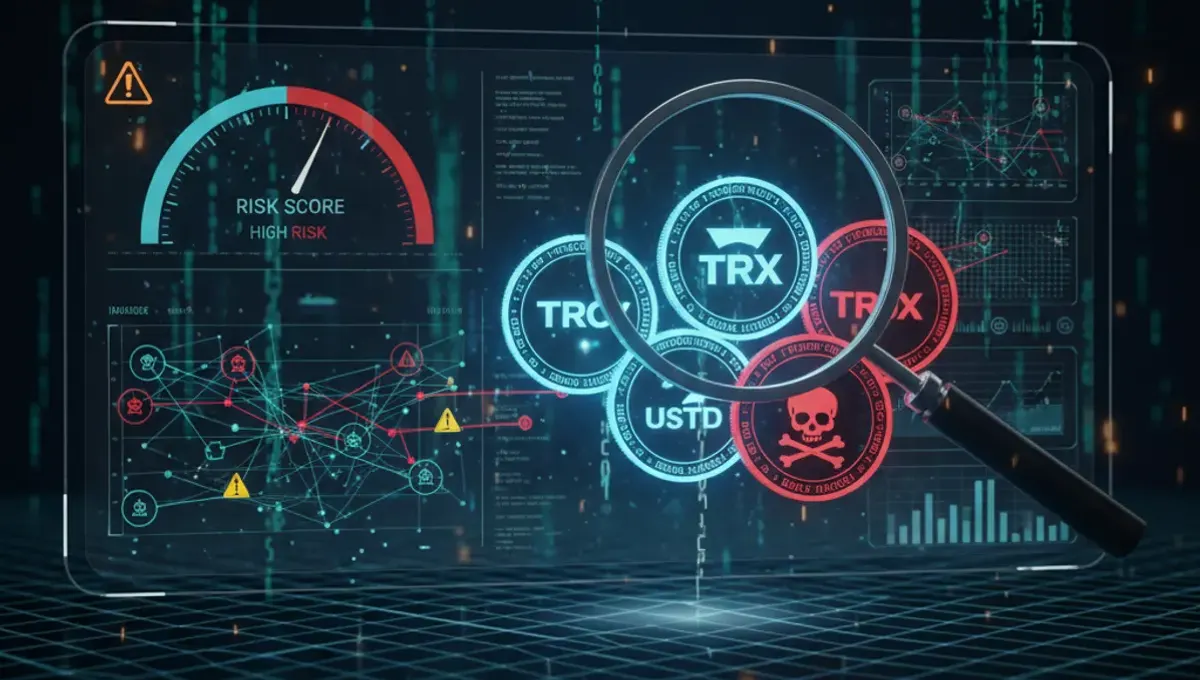
AML risk scores quantify the compliance danger of a wallet on a numerical scale, typically 0–100 or 0–1000, where higher scores indicate greater risk. Scoring algorithms analyze multiple factors: transaction frequency, mixer usage, time elapsed since fund receipt, darknet exposure, and sanctions list matches. A wallet that has never interacted with known mixers or illicit services receives a low risk score. Conversely, a wallet that received funds directly from a mixer or darknet market receives a high score. Intermediate scores reflect partial risk: for example, a wallet that received funds from an exchange (low risk) but later sent coins to a mixer (elevated risk) sits in the middle range. Most compliance platforms categorize scores into tiers: green (low risk, typically 0–20), yellow (medium risk, 21–70), and red (high risk, 71–100). Understanding these thresholds helps you decide whether to accept a transaction. Exchanges typically reject deposits from red-flagged wallets and may scrutinize yellow-flagged ones.
Step-by-Step: How to Check a Crypto Wallet Before Receiving Funds
Follow this process to screen a wallet safely:
- Obtain the wallet address from the sender in full, ensuring no typos or truncation.
- Copy the address into a wallet screening tool (check our curated AML Services list for verified platforms).
- Review the risk score and risk category assigned to the wallet.
- Examine the transaction history summary: look for mixer interactions, darknet connections, or sanctioned entity links.
- Check the time-to-spend metric—how long the wallet has held its current funds. Older funds are typically lower risk.
- Verify the source of funds: did they come from a regulated exchange, peer-to-peer transfer, or unknown origin?
- Assess the destination patterns: has this wallet sent coins to high-risk services?
- Make a decision: accept if risk is acceptable for your compliance threshold, or request an alternative wallet from the sender.
This screening takes minutes and prevents costly mistakes. For USDT TRC20, Tron, and Bitcoin addresses, the process is identical—only the blockchain differs.
What Risk Score Levels Mean and When to Accept or Reject
Risk score interpretation depends on your compliance posture and regulatory environment. A low-risk wallet (score 0–20) has clean transaction history, no mixer exposure, and legitimate sources. These are safe to accept in almost all contexts. Medium-risk wallets (score 21–70) may have minor red flags: perhaps they received funds from a peer-to-peer source or held coins for an unusual duration. Many businesses accept medium-risk wallets if the sender is known and the transaction amount is reasonable. High-risk wallets (score 71–100) show significant compliance concerns: direct mixer usage, darknet market connections, stolen fund indicators, or sanctions list matches. Most regulated exchanges and custodians reject high-risk wallets outright. If you receive a deposit from a high-risk wallet, your exchange account may be frozen pending investigation. For USDT and other stablecoins, exchanges enforce stricter thresholds—many reject anything above 50. Always define your acceptable risk threshold before screening, and document your decision for audit purposes.
Common Risk Categories: Mixers, Darknet, Scams, and Sanctions
Crypto wallets accumulate risk through specific behaviors. Mixer exposure occurs when a wallet sends coins to or receives from a mixing service—a tool designed to obscure transaction trails. Darknet market connections flag wallets that have transacted with known illicit marketplaces. Scam-related risk appears when a wallet is linked to Ponzi schemes, rug pulls, or fraudulent projects. Stolen funds risk applies to wallets receiving coins from confirmed theft or hacking incidents. Sanctions risk indicates the wallet belongs to or has received funds from a sanctioned entity or jurisdiction. Gambling exposure flags wallets with activity on unregulated gambling platforms. Each risk category carries different regulatory weight: sanctions violations are criminal in most jurisdictions, while mixer usage is treated as suspicious activity. When you check a crypto wallet, the screening tool will break down which categories apply. Understanding these distinctions helps you assess whether the risk is acceptable or a dealbreaker for your compliance policy.
How to Check Wallet Balance and Transaction History
Checking a crypto wallet balance and history is separate from AML screening but complementary. You can view any public wallet's balance and transactions directly on a blockchain explorer (e.g., Tronscan for Tron, Etherscan for Ethereum, Blockchain.com for Bitcoin). Enter the wallet address, and the explorer displays all incoming and outgoing transactions, current balance, and transaction timestamps. This transparency is a feature of public blockchains—anyone can audit any wallet. However, a blockchain explorer shows only on-chain data; it doesn't flag risk or compliance issues. That's where AML wallet screening tools add value: they overlay risk analysis, sanctions checks, and behavioral scoring on top of the raw transaction data. For a complete picture before accepting a deposit, combine both: use a blockchain explorer to verify the balance and transaction count, then use an AML screening tool to assess compliance risk. This dual approach ensures you're not just receiving the right amount—you're receiving it from a wallet that won't trigger regulatory problems.
What to Do If Your Wallet Is Flagged as High-Risk or Tainted
If your wallet receives a high-risk or tainted coin flag, your options depend on the severity. For medium-risk flags, contact the exchange or custodian holding your funds and provide context: explain the source of the deposit and request manual review. Many platforms will clear medium-risk wallets after verification. For high-risk flags, the situation is more serious. Your exchange account may be frozen pending investigation, and you may be required to prove the funds' legitimate origin. Document everything: the sender's identity, the business reason for the transfer, and any prior relationship. If the funds are genuinely yours but flagged due to a false positive (rare but possible), work with compliance teams to dispute the flag. If the funds are genuinely tainted—received from a scam or theft—you face a difficult choice: attempting to exchange them may trigger account freezes or legal complications. Prevention is far simpler: screen wallets before accepting deposits using the verified AML services listed on our platform. This proactive approach avoids frozen USDT, account bans, and regulatory headaches entirely.
Frequently asked questions
Can I check a crypto wallet for free?
Many blockchain explorers offer free balance and transaction viewing. However, comprehensive AML screening—risk scoring, sanctions checks, mixer detection—typically requires a paid service. Some platforms offer limited free checks with restricted data. For reliable wallet screening, use verified AML services; free tools often lack depth and accuracy needed for compliance decisions.
How do I know if a wallet has received stolen crypto?
Blockchain analysis tools flag wallets linked to confirmed theft or hacking incidents by cross-referencing transaction histories with known breach databases. When you run an AML check on a wallet, the risk report will indicate if funds trace back to stolen sources. However, detection depends on whether the theft was publicly reported and indexed. Always screen wallets through trusted AML platforms for accurate stolen fund detection.
What happens if I receive USDT from a high-risk wallet?
Receiving USDT from a high-risk wallet can trigger exchange account freezes, transaction reversals, or regulatory investigations. Your exchange may lock your account pending compliance review. In worst cases, you may be unable to withdraw funds. Prevention is critical: screen wallet addresses before accepting USDT deposits. Check our AML Services list for tools that specialize in USDT TRC20 and other stablecoin screening.
How long does a crypto wallet AML check take?
Most AML wallet checks complete in seconds to minutes. You enter the address, and the screening tool instantly returns a risk score, category, and detailed report. Real-time screening is standard across reputable platforms. For complex cases requiring manual review, some services may take hours, but automated checks are nearly instantaneous.
Can I check a wallet on Tron, Bitcoin, and Ethereum the same way?
Yes, the screening process is identical across blockchains. You enter the wallet address into an AML tool, and it analyzes that blockchain's transaction history. Different blockchains have different characteristics—Tron is faster and cheaper, Bitcoin is older and more established—but compliance screening works the same way. Verified AML services support multiple blockchains, including USDT TRC20, BTC, and ETH.