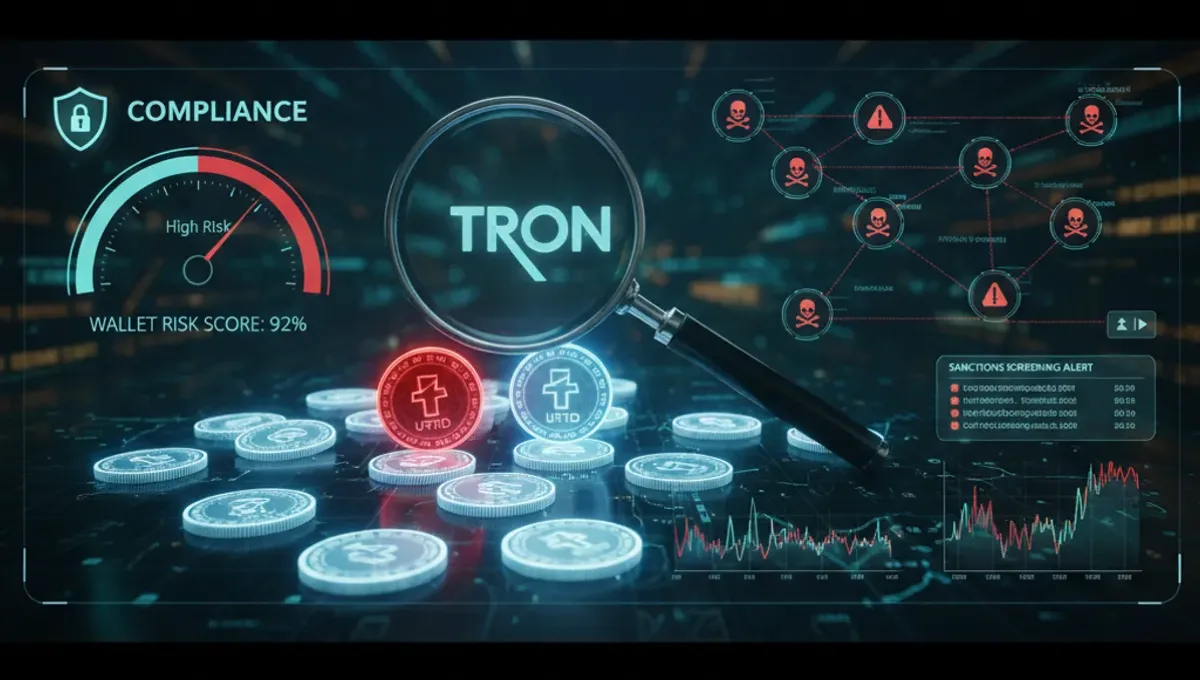
Why Crypto Compliance Matters: Lessons from Recent Cases
When a crypto platform executive faces detention on bribery charges, it's not just a compliance problem—it signals systemic risk across the entire ecosystem. Platforms operating without proper KYC and transaction monitoring become vehicles for corruption and money laundering. For everyday traders, this means one thing: you cannot assume the coins you receive are clean.
Regulators now treat wallet owners as liable for accepting tainted assets. A single USDT TRC20 transfer from a frozen account, darknet marketplace, or sanctioned entity can result in:
- Your exchange account flagged and funds frozen indefinitely
- Difficulty moving crypto off-ramp without KYC interrogation
- Potential civil liability if coins trace to theft or sanctions violations
- Loss of access to regulated trading venues
A free AML crypto check takes 60 seconds and costs nothing. Skipping it costs far more.
What Is an AML Crypto Check?
AML (Anti-Money Laundering) wallet screening is a blockchain analytics scan that traces transaction history and flags risk exposure. Unlike traditional banking, where compliance happens behind closed doors, crypto wallets are transparent—every transaction is recorded on-chain. Screening tools read that history and assign a risk score.
An AML check answers three questions:
- Has this wallet received stolen funds? (theft indicators)
- Does it connect to darknet markets, mixers, or gambling platforms? (illegal activity)
- Is the wallet linked to sanctioned entities or politically exposed persons? (sanctions lists)
Most free tools score wallets on a scale of 1–100 or categorize them as Low/Medium/High/Critical risk. Medium-risk transfers often pass exchange deposits. Critical-risk wallets trigger automatic freezes.
How to Check a Wallet Before Accepting USDT or TRX
Before accepting any deposit, run a free AML wallet check:
Step 1: Copy the wallet address - Sender shares their address, or you extract it from the pending transaction - Verify it matches the claimed blockchain (Tron address starts with T; Bitcoin with 1/3/bc1; Ethereum with 0x)
Step 2: Choose a wallet screening service - Visit our AML Services page to review trusted, verified platforms - Free options typically scan 100–200 wallets/month before hitting limits - Premium services offer unlimited checks, transaction reports, and API integration
Step 3: Paste the address and run the scan - Most tools return results in seconds - Look for the risk score, top risk factors, and linked entities
Step 4: Interpret the result - Green (Low risk): Safe to accept; no darknet, mixer, or theft signals detected - Yellow (Medium risk): Caution; may contain old flagged transactions or proximity to risky wallets; decide case-by-case - Red (High/Critical risk): Reject; strong links to theft, sanctions, or active darknet use
Understanding Risk Scores and Acceptable Thresholds
Not all red flags are equal. A wallet may score medium risk because it received a transaction from a privacy mixer 3 years ago—old, minor exposure. Another wallet might score high risk due to direct transfers from an active ransomware address last week.
Practical thresholds:
| Risk Level | Characteristics | Action |
|---|---|---|
| Low (0–20) | No darknet, theft, or sanctions signals | Accept deposits |
| Medium (21–50) | Minor mixer links, old flagged proximity, low-tier gambling | Review transaction detail; ask sender for context |
| High (51–80) | Active mixing, recent theft links, unresolved sanctions proximity | Escalate or reject |
| Critical (81–100) | Darknet marketplace, active ransomware, direct sanctioned entity link | Reject immediately |
Exchanges and custody providers typically auto-freeze wallets scoring above 70–80. If you accept a high-risk wallet and later attempt to deposit it elsewhere, compliance teams will flag your account.
Common Risk Factors Explained
Darknet marketplace exposure: Wallet has sent or received funds from Silk Road, Dream Market, or other illegal marketplaces. Usually critical risk.
Mixer activity: Coins passed through privacy mixers (Tornado Cash, Mixero). Medium to high risk depending on recency; regulators view mixing as evasion.
Stolen funds: Traced to known theft (exchange hacks, private key compromise). High to critical risk; often frozen on major exchanges.
Sanctions lists: Wallet matches or connects to OFAC, EU, or UK-designated entities. Critical risk; criminal liability possible.
Gambling platforms: Withdrawal from casinos or betting sites. Low to medium risk; most major exchanges accept, but some restrict.
Ransomware payments: Traced to known ransomware gang wallets. Critical risk; federal agencies actively track and seize.
What to Do If Your Coins Are Flagged as Dirty
If you already accepted flagged coins or your wallet was blacklisted:
- Do not deposit to a regulated exchange. You will trigger automated blocks and attract compliance review.
- Do not mix or tumble the coins. This looks like deliberate evasion and increases liability.
- Document the source. If coins were received unknowingly, keep records of the sender.
- Contact a compliance expert. Some coins can be "cleansed" if they predate the triggering event by years, but this requires legal guidance.
- Consider a peer-to-peer off-ramp. Non-custodial platforms (DEXs, P2P swaps) won't flag you, but KYC will still apply for fiat conversion.
Free vs. Paid AML Wallet Screening Tools
Free tools are excellent for quick checks. For recurring use, paid plans offer better value:
Free AML checks: - Limited monthly scans (50–200) - Basic risk score and top risk factors - No transaction history drill-down - No API access
Paid AML services: - Unlimited scans or high monthly allowance - Full transaction history, risk breakdown by time period - API integration for businesses - Whitelisting and exclusion lists - Customer support and compliance reporting
For a curated list of verified, tested AML screening platforms, visit our AML Services page—each service is reviewed for accuracy, speed, and compliance standing.
Takeaways: Protect Yourself Before Accepting Crypto
- Check every wallet receiving over $1,000 worth of crypto, especially USDT (TRC20) and Bitcoin
- Use a free AML check as your baseline; most take under a minute
- Reject critical-risk wallets. The cost of one frozen account far exceeds the transaction
- Understand your threshold. If you trade, decide in advance what risk level you'll accept (usually Low or Low-Medium)
- Use trusted services. Visit Cryptoamlnode.com's verified AML Services for tested, compliant screening tools
- Document your checks. If audited, proof that you ran AML screening protects you
FAQ
Q: Can I check a Tron USDT address for free? A: Yes. Most free AML tools support TRC20 USDT on Tron. Paste the wallet address, run the scan, and get a risk score in seconds—no account needed.
Q: What does "mixer" mean in a crypto wallet check? A: A mixer (or tumbler) is a service that pools deposits from many users, shuffles them, and redistributes, breaking the on-chain link to the original sender. Regulators view mixing as a money-laundering red flag; wallets with mixer activity often score medium to high risk.
Q: Will my exchange freeze my account if I deposit from a medium-risk wallet? A: Usually no, but it depends on the exchange and the specific risk. Tier-1 exchanges (Kraken, Coinbase) often accept medium-risk transfers but may request extra documentation. Tier-2 exchanges may flag your account for review. Critical-risk wallets almost always trigger auto-freezes.
Q: Is it legal to receive crypto from a sanctioned wallet? A: No, not in most jurisdictions. Receiving funds knowingly from a sanctioned entity violates OFAC (US), EU, and UK sanctions laws and can result in civil penalties or criminal charges. Always check before accepting.
Q: Can old risk scores be removed? A: No. A wallet's on-chain transaction history is permanent. However, risk scores evolve; a wallet flagged 5 years ago for minor mixer activity may score lower today if no new risky transactions occur. Always run a fresh check before any major transaction.
---
Source: The Block